Simple Maintenance Systems That Extend Tool and Equipment Life

Start Here
Tool and equipment life rarely depends on one major decision.
More often, it depends on small maintenance habits repeated consistently over time.
When maintenance is handled only after something fails, systems become reactive, expensive, and unpredictable. But when cleaning, inspection, storage, calibration, and basic care become part of the workflow, tools last longer and perform more reliably.
A maintenance system does not need to be complicated. It needs to be repeatable.
Before reading, consider how much of your current tool care is based on routine versus reaction.
Ask Yourself These Questions:
Which tools or pieces of equipment are most likely to fail because they are used often but rarely maintained?
Do I have a repeatable system for cleaning, inspecting, and storing tools after use?
Which maintenance tasks are easy enough to do regularly but still get skipped?
Are my tools stored in a way that protects them from dust, moisture, impact, or disorganization?
Do I know which tools need periodic calibration, blade changes, filter changes, lubrication, or battery care?
Where would a simple checklist prevent avoidable wear or damage?
What small maintenance habit would save the most money, time, or frustration over the next year?
Most tools and equipment don’t fail suddenly.
They wear down gradually—through small changes that are easy to overlook.
Performance becomes less consistent. Noise increases. Efficiency drops. Over time, these small shifts lead to failure, replacement, and unnecessary cost.
In many cases, the issue isn’t the quality of the tool. It’s the absence of a system to maintain it.
Maintenance is often treated as something that happens after a problem appears. But the most effective environments approach it differently.
They treat maintenance as part of the system.
When maintenance is built into how tools are used and stored, performance remains consistent, lifespan increases, and disruptions become less frequent.
The Problem: Reactive Maintenance
In many setups, maintenance happens only when something goes wrong.
A tool stops working. Performance drops noticeably. A part fails. At that point, attention shifts to repair or replacement.
This reactive approach often leads to:
shortened tool lifespan
unexpected downtime
inconsistent performance
higher long-term cost
Because maintenance isn’t structured, it becomes inconsistent.
Some tools are maintained regularly. Others are overlooked. Over time, this creates an environment where reliability varies from one task to the next.
The issue is not effort—it is the lack of a system.
The Shift: Maintenance as a Routine, Not a Response
A maintenance system removes the need to decide when to act.
Instead of asking:
“Does this need attention right now?”
The question becomes:
“What is the standard for keeping this working?”
This shift turns maintenance into a routine.
Small actions—performed consistently—prevent larger problems from developing.
Tools remain reliable. Systems remain stable. Workflows remain uninterrupted.
What Maintenance Systems Actually Look Like
Maintenance systems do not need to be complex.
In most environments, they are built from simple, repeatable actions that align with how tools are used.
Regular Inspection
Inspection is the first layer of maintenance.
It involves noticing small changes before they become larger issues.
This may include:
checking for loose components
identifying unusual wear
noticing changes in performance or sound
Inspection does not require detailed analysis. It requires attention and consistency.
Cleaning as a Functional Process
Cleaning is often seen as cosmetic, but it plays a direct role in performance.
Dust, debris, and residue:
increase wear
reduce efficiency
affect internal components
Simple cleaning routines—performed regularly—help preserve function and extend lifespan.
When cleaning is part of the system, tools remain more reliable.
Managing Wear and Consumables
Many tools rely on components that are designed to wear over time.
These may include:
blades
filters
batteries
belts
Waiting for these components to fail often places additional stress on the tool itself.
Replacing them before performance declines:
maintains efficiency
protects internal systems
reduces strain on other components
This is one of the simplest ways to extend tool life.
Maintaining Proper Storage Conditions
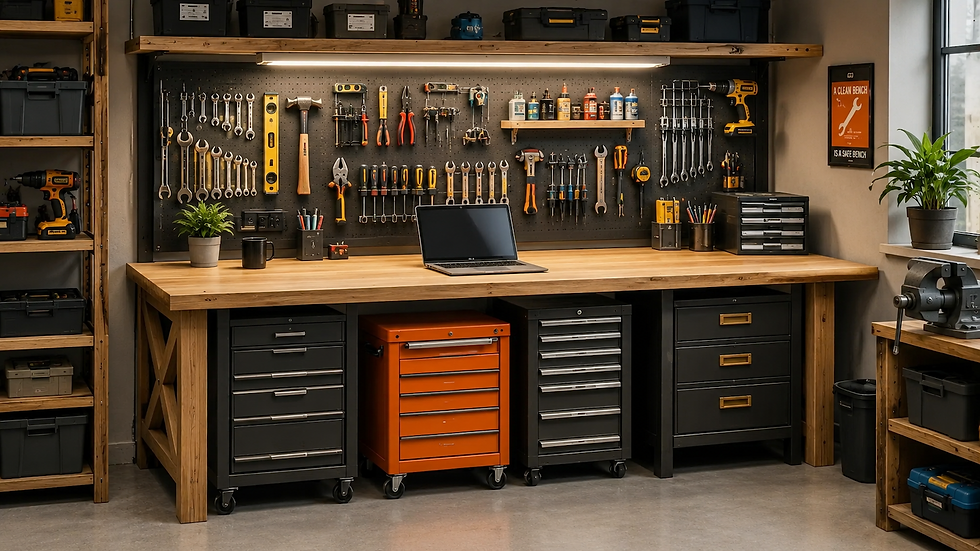
How tools are stored directly affects how they perform over time.
Poor storage can lead to:
moisture exposure
unnecessary wear
damage from impact or pressure
Effective storage:
protects tools from environmental factors
keeps components organized
supports easy access and return
Storage is not separate from maintenance—it is part of it.
Consistent Placement and Return
One of the most overlooked aspects of maintenance is consistency.
When tools are returned to the same place after use:
they are easier to inspect
they are easier to maintain
issues are easier to identify
Inconsistent storage leads to inconsistent maintenance.
Consistency supports awareness.
Reducing Friction in Maintenance
Maintenance systems fail when they are difficult to follow.
If a process requires too many steps, takes too much time, or interrupts workflow, it becomes inconsistent.
Reducing friction is key.
This includes:
keeping maintenance tools accessible
integrating maintenance into existing routines
avoiding overly complex schedules
When maintenance is simple, it is more likely to happen.
Integrating Maintenance With Daily Use
The most effective maintenance systems are built into daily activity.
Instead of setting aside separate time for maintenance, small actions are integrated into:
starting a task
completing a task
returning tools to storage
For example:
a quick inspection before use
cleaning immediately after use
returning tools to a consistent location
These actions take little time individually but create significant long-term impact.
Avoiding Common Maintenance Mistakes
A few common patterns reduce the effectiveness of maintenance systems:
Waiting for Visible Failure
By the time a problem is obvious, additional damage has often occurred.
Overcomplicating the Process
Complex systems are difficult to maintain consistently.
Inconsistent Application
Maintaining some tools but not others creates uneven performance across the system.
Separating Maintenance From Workflow
When maintenance is treated as a separate task, it is more likely to be delayed or skipped.
Simple Principles for Effective Maintenance Systems
A few principles help keep maintenance consistent and effective:
Keep processes simple
Simplicity supports consistency.
Focus on small, repeatable actions
Regular attention prevents larger problems.
Integrate maintenance into daily use
Routine actions are more reliable than occasional effort.
Protect tools through proper storage
Environment matters as much as use.
Maintain consistency across all tools
Systems work best when applied evenly.
Building Systems That Preserve Performance
Maintenance is not about reacting to failure. It is about preventing it.
When maintenance is part of the system:
tools perform more consistently
lifespan is extended
downtime is reduced
Over time, this creates a noticeable difference.
Instead of replacing tools frequently or dealing with inconsistent performance, the system begins to support reliability.
The goal is not perfection. It is consistency.
When small actions are repeated over time, tools last longer, systems remain stable, and environments become easier to manage.
In the end, maintenance is not a separate task. It is part of how a system works—and how it continues to work over time.