Safety Isn’t an Add-On — It’s a System

Start Here
Safety is often treated as something added after the work has already been designed.
That is where many systems begin to break down.
When safety depends on reminders, warnings, or good intentions alone, it becomes easy to skip under pressure. A stronger approach builds safety directly into the workflow through layout, storage, access, visibility, maintenance, and repeatable habits.
A good safety system does not slow the work down. It makes the work more consistent, more controlled, and less vulnerable to avoidable failure.
Before reading, consider whether safety is truly part of your system or simply something you try to remember.
Ask Yourself These Questions
Where does safety currently depend on memory instead of structure?
Which tools, materials, or spaces create the most avoidable risk?
Is safety equipment stored where it is actually needed?
Are hazards visible, labeled, separated, or controlled before work begins?
Which safety steps are most likely to be skipped when the work gets busy?
Does the layout of the space make safe behavior easier or harder?
What small system change would make the safest choice the easiest choice?
In many environments, safety is treated as something separate from the work itself.
Protective equipment is available, but not always used. Safety measures are considered when something feels risky, but often overlooked during routine tasks.
Over time, this creates a pattern where safety becomes reactive instead of consistent.
But the most effective environments don’t rely on reaction.
They rely on systems.
When safety is built into the way work is done—rather than added on when needed—it becomes easier to maintain, easier to follow, and far more effective over time.
The Problem: Safety as an Afterthought
In both home and professional settings, safety is often approached with good intentions but inconsistent execution.
Equipment may be available, but:
it isn’t always within reach
it requires extra steps to use
it isn’t integrated into the workflow
A quick task doesn’t seem to require protection. A small shortcut feels harmless. Over time, these small decisions become habits.
The issue isn’t a lack of awareness. It’s a lack of structure.
Without a system, safety depends on memory, judgment, and timing—all of which can vary from one task to the next.
The Shift: From Reaction to Routine
A safety system removes the need to decide each time.
Instead of asking:
“Do I need this right now?”
The question becomes:
“Is this part of how the task is done?”
This shift changes safety from something optional to something expected.
It reduces hesitation, eliminates uncertainty, and creates a consistent approach that applies across tasks—whether simple or complex.
PPE as Habit, Not Reaction
Personal protective equipment (PPE) is one of the most visible aspects of safety, but it is often used inconsistently.
When PPE is treated as a reaction:
it is used only when risk feels obvious
it is skipped during routine tasks
it becomes easy to overlook
When PPE is part of a system:
it is used consistently
it is incorporated into the start of each task
it becomes automatic over time
This doesn’t require strict rules or complex processes. It requires integration.
For example:
eye protection stored at the point of use
gloves kept with the tools that require them
hearing protection placed where loud tasks begin
These small adjustments reduce the effort required to use PPE and make consistency easier to maintain.
Visibility: Making Safety Easy to Remember
One of the simplest ways to improve safety is to make it visible.
Items that are out of sight are often out of mind. When safety equipment is stored in closed containers or separate locations, it is less likely to be used consistently.
Visibility supports habit by:
keeping safety equipment in plain view
reinforcing its role in the task
reducing the need to search or remember
This doesn’t require complex setups. Even simple solutions—such as open storage or clearly designated areas—can make a significant difference.
Accessibility: Removing Barriers to Use
Accessibility is closely tied to consistency.
If safety equipment is difficult to reach, requires extra steps, or interrupts workflow, it becomes less likely to be used—especially during quick or routine tasks.
A safety system removes these barriers by:
placing equipment where it is needed
reducing the steps required to use it
aligning storage with how work is actually performed
When access is simple, use becomes more consistent.
Consistency: The Foundation of Effective Safety
Consistency is what turns safety from intention into practice.
Without consistency:
safety depends on memory
habits are unpredictable
outcomes vary from one task to the next
With consistency:
safety becomes part of the process
decisions are simplified
environments become more predictable
Consistency doesn’t require perfection. It requires repetition.
Small, repeatable actions—such as using PPE at the start of each task or returning safety equipment to the same location—build systems that hold over time.
Safety Across Different Environments
The principles of safety systems apply across a range of environments:
The principles of safety systems apply across a wide range of environments. While the specific hazards may change, the underlying goal remains the same: creating repeatable processes that make safe decisions easier, more visible, and more consistent.
Workshops and Tool-Based Work
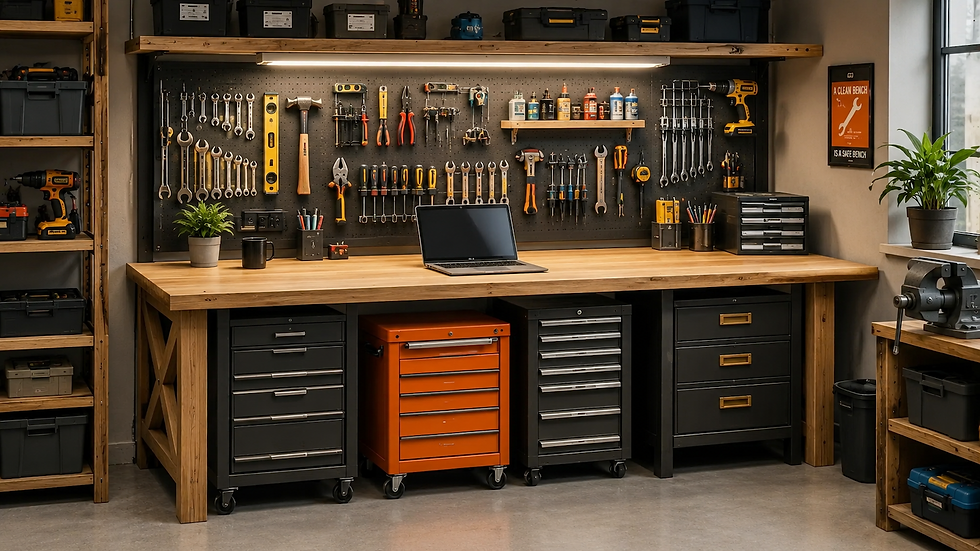
In tool-focused environments, safety is closely tied to how tools are used, maintained, and stored.
A system-based approach includes:
keeping protective equipment near the tools that require it
maintaining clear, unobstructed work areas
inspecting tools regularly for wear or damage
establishing consistent storage and cleanup procedures
These practices support both efficiency and safer outcomes.
Warehouses, Facilities, and Industrial Operations
In warehouses, manufacturing environments, and industrial facilities, safety depends heavily on organization, visibility, and predictable workflows.
Effective safety systems often include:
clearly marked traffic lanes and pedestrian routes
designated storage areas for equipment and materials
routine equipment inspections and maintenance schedules
standardized procedures for lifting, material handling, and machine operation
consistent communication of hazards and operational changes
When systems reduce confusion and improve visibility, they help minimize avoidable incidents while supporting productivity.
Roadway, Utility, and Field Work
In roadside operations, utility work, flagging operations, and field environments, conditions can change rapidly and hazards are often less controlled.
Strong safety systems help teams maintain consistency through:
* clearly defined work-zone setups
* high-visibility equipment and apparel
* standardized traffic control procedures
* reliable communication methods
* routine equipment checks before deployment
* documented emergency response procedures
Because these environments involve moving vehicles, changing weather, and dynamic conditions, safety systems provide structure when circumstances become unpredictable.
Outdoor and Property Maintenance Tasks
In outdoor settings, consistency remains equally important.
Simple systems such as accessible storage, organized equipment, reliable lighting, clear pathways, and routine maintenance schedules help create safer working conditions across a variety of tasks and environments.
Regardless of the setting, the strongest safety systems are not built around reminders alone. They are designed into the workflow itself, making safe practices a natural part of how work gets done.
Preparedness and Everyday Readiness
Safety systems also extend into preparedness.
This does not require complex planning. It involves having simple, reliable elements in place:
accessible lighting
organized storage for essential items
backup options for common disruptions
These systems support everyday use while also providing additional security when needed.
Simple Principles for Building a Safety System
Effective safety systems are built on a few practical principles:
Make safety visible
What is easy to see is easier to use.
Keep access simple
Reduce the effort required to use protective equipment.
Integrate safety into tasks
Treat safety as part of the process, not an extra step.
Prioritize consistency
Repeatable actions create reliable outcomes.
Build around real use
Systems should reflect how tasks are actually performed.
Building Environments That Support Safer Work
Safety is not a separate layer added to an environment. It is part of how that environment functions.
When safety is built into systems:
tasks become more consistent
risks are reduced without adding complexity
work becomes easier to manage over time
The goal is not to create rigid rules or slow down progress. It is to create an environment where safety happens naturally—because the system supports it.
In the end, safety is not something that needs to be remembered. It is something that is built into the way work is done.