Preparedness Without Panic: Building Systems That Support Everyday Life
Updated: May 18
Preparedness is often misunderstood.
It’s commonly associated with extreme scenarios, complex plans, or large amounts of specialized equipment. For many people, that perception creates distance. It makes preparedness feel unnecessary, overwhelming, or difficult to approach.
But in practice, preparedness doesn’t need to be dramatic to be effective.
At its core, preparedness is simply about having systems in place that support everyday life—especially when things don’t go exactly as expected.
When approached this way, preparedness becomes practical, manageable, and useful on a daily basis.
The Problem: When Preparedness Feels Too Complex
One of the main reasons people avoid preparedness is that it often feels like an all-or-nothing effort.
It can seem like:
everything must be planned in advance
every possible scenario must be considered
large amounts of equipment are required
This approach creates unnecessary pressure.
As a result, preparedness is often delayed or ignored—not because it isn’t valued, but because it feels too complicated to start.
The reality is that most effective preparedness systems are simple.
They focus on common needs, everyday use, and small adjustments that make environments more reliable over time.
The Shift: From Emergency Thinking to Everyday Systems
Preparedness becomes easier when it is reframed.
Instead of focusing on rare or extreme situations, the focus shifts to everyday reliability.
Instead of asking:
“What would I do in a worst-case scenario?”
The question becomes:
“What systems make daily life more consistent and easier to manage?”
This shift removes urgency and replaces it with intention.
Preparedness becomes part of how a space functions—not something separate that is only considered in emergencies.
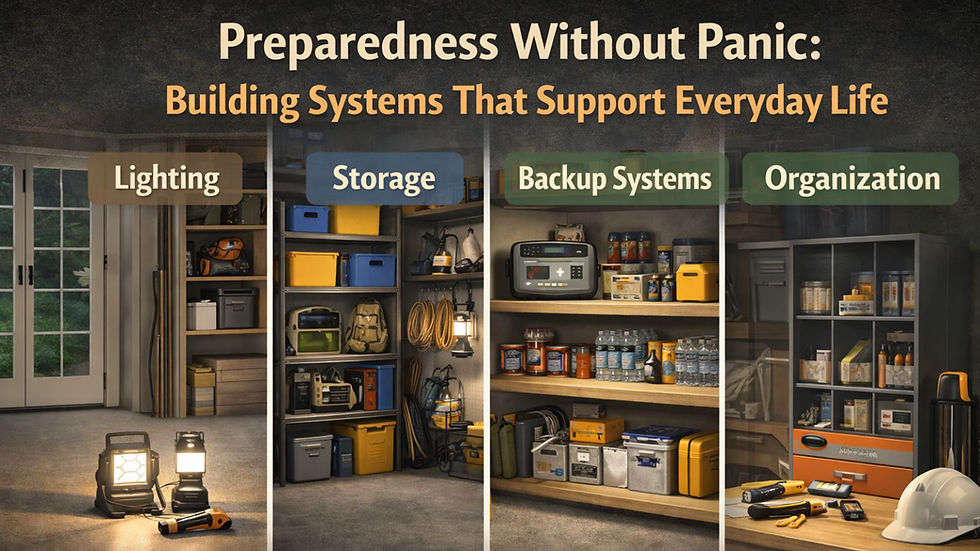
Lighting: A Simple but Essential System
Lighting is one of the most practical elements of preparedness, yet it is often overlooked.
Reliable lighting supports:
visibility during routine tasks
safer movement in low-light conditions
continuity when primary lighting is unavailable
A simple lighting system might include:
accessible flashlights or portable lights
consistent storage locations
backup options that are easy to use
The goal is not to create complexity. It is to ensure that light is available when it is needed—without requiring extra effort to find or use it.
Storage: Keeping Essential Items Accessible
Preparedness is closely tied to how items are stored.
Even the most useful tools or supplies become ineffective if they are difficult to locate or access.
A practical storage system:
groups essential items together
keeps frequently used items easy to reach
avoids overcomplicating organization
This applies to a wide range of items, including:
basic tools
protective equipment
everyday supplies
When storage reflects how items are actually used, it becomes easier to maintain and
more reliable over time.
Backup Systems: Simple Support for Everyday Use
Backup systems don’t need to be extensive to be effective.
In most cases, they provide support for common disruptions rather than extreme situations.
Examples include:
alternative lighting options
secondary power sources for small devices
extra supplies for routine tasks
These systems are most useful when they are:
easy to access
simple to understand
integrated into the environment
When backup systems are overly complex, they are less likely to be used. When they are simple and visible, they become part of everyday readiness.
Organization: The Foundation of Preparedness
Organization is what allows preparedness systems to function.
Without structure:
items are harder to find
systems become inconsistent
reliability decreases
With structure:
essential items are easy to locate
tasks require less setup
environments are easier to maintain
Preparedness does not require more items—it requires better organization of what is already there.
This aligns directly with a “do more with less” approach.
Preparedness Across Different Environments
Preparedness systems can be applied across a variety of spaces, each with its own needs.
Home and Garage Environments
In home settings, preparedness often overlaps with everyday organization.
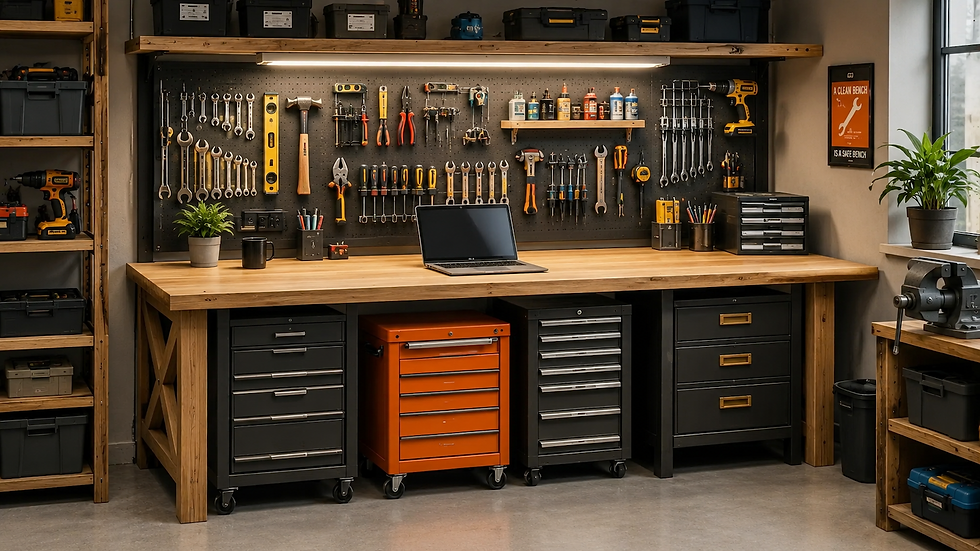
Simple systems—such as accessible storage, reliable lighting, and organized tools—support both daily tasks and unexpected situations.
Outdoor and Utility Spaces
Outdoor environments benefit from preparedness systems that account for changing conditions.
This might include:
protected storage for tools and supplies
lighting for early or late work
easy access to essential equipment
These systems improve both usability and reliability.
Workspaces and Task-Oriented Areas
In work-focused environments, preparedness supports efficiency and consistency.
Having the right items in place—organized and accessible—reduces interruptions and allows work to continue without unnecessary delays.
Simple Principles for Practical Preparedness
Preparedness systems are most effective when they follow a few key principles:
Keep systems simple
Complexity makes systems harder to maintain.
Focus on everyday use
Systems that are used regularly are more reliable.
Make items easy to access
Accessibility supports consistency.
Avoid overbuilding
More equipment does not always improve preparedness.
Maintain what you already have
Reliability comes from consistency, not accumulation.
Building Systems That Support Everyday Life
Preparedness is not about preparing for everything. It is about creating environments that are stable, reliable, and easy to use.
When simple systems are in place:
daily tasks become more efficient
small disruptions are easier to manage
environments require less effort to maintain
Over time, these systems create a sense of readiness that is calm and practical—not urgent or overwhelming.
The goal is not to anticipate every possibility. It is to build a foundation that supports both everyday life and the unexpected.
When preparedness is approached this way, it becomes less about reacting to problems—and more about creating systems that work, no matter the situation.